Bridges that are grown, not built — some over 150 years old and still strengthening. How they work, where to find them, how hard the treks are.
How a bridge is grown
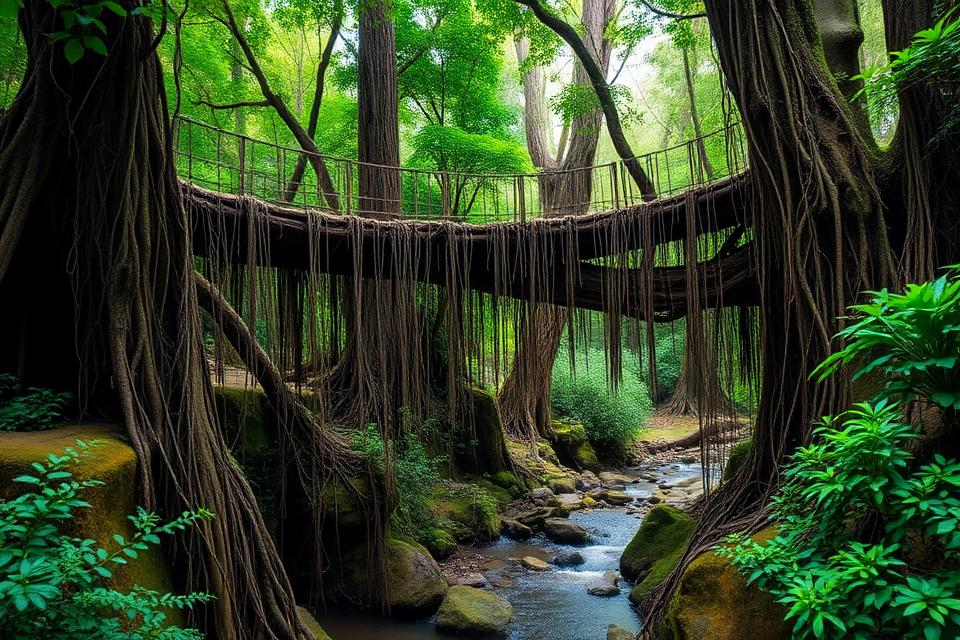
Khasi and Jaintia villagers train the aerial roots of the rubber fig (Ficus elastica) across streams using bamboo or betel-trunk scaffolds. Over 15–30 years the roots thicken, fuse and self-strengthen — living architecture that outlasts steel in this rain-soaked terrain.
The famous double-decker
Nongriat's two-tiered bridge is the icon. Reaching it means ~3,500 steps down (and back up) from Tyrna village — 3–5 hours round trip with pools to swim in en route. Go early, carry water, and consider a night in Nongriat's homestays to also visit Rainbow Falls.
Gentler alternatives
Riwai's single-span bridge near Mawlynnong is a flat 10-minute walk — ideal for families and older travellers. Pynursla's Rangthylliang cluster offers the longest bridges with a moderate trek and a fraction of the visitors.
Visit responsibly
These are village-maintained, sacred structures. Pay the entry fees (they fund upkeep), don't bounce or carve, and follow local guidance. UNESCO has the bridges on its tentative World Heritage list — help keep them alive.
Want this trip planned for you?
Everything in this guide — permits, routes, stays — handled personally by our team.
Plan My Trip